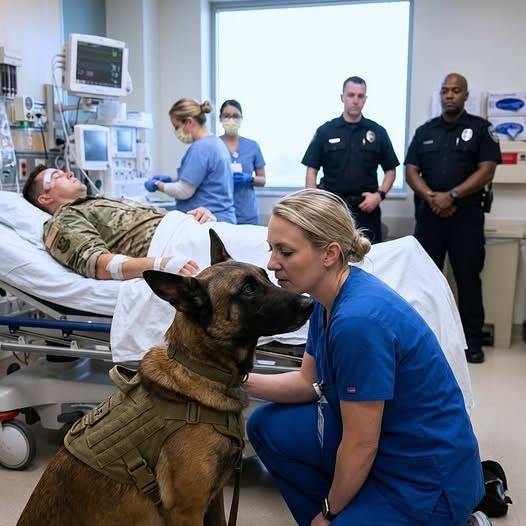
At 2:14 a.m., the door of the emergency room opened violently, hitting the fender. The night shift barely managed to look up when two soldiers fell in, running after the stretcher. There was an unconscious Navy SEAL – in a uniform torn on the left, with blood dimming bandages already put on. But the first thing anyone noticed was not blood.
It was a dog.
The powerful Belgian malinois shepherd moved like a stretcher glued – an arm based on a handrail, an eye stuck in the chest of a SEAL soldier, a body tense and ready. No fear. Discipline. The nurse took a step forward, baring her teeth. As the doctor grabbed the stretcher brakes, a low, terrifying braid was heard.
“Who brought this dog?” Someone shouted.
“He will not disappoint him,” the soldier growled. “He’s his friend.”
There was a storm in the trauma room. Cardiopulmonary resuscitation carts drove in. The monitors were posting. The surgeons shouted orders before the stretcher stopped. “Life!”
“The pressure drop. A shrapnel in the left side. Possible internal bleeding.”
“Accident during exercise. “A grenade failure.”
The soldiers maneuvered the stretcher, but the radio slammed sharply. The face of one of the men cringed. He looked at the SEAL and then the dog.
“We have to go,” he muttered.
“The dog...”
“Stay,” he whispered, pressing his hand against the neck of the police dog.
Then both soldiers disappeared, leaving the unconscious SEAL and his dog in the hands of civilians.
The room froze. One of the medics came closer. The dog lined up between the stretcher and the staff. Another medic approached. The animal made a clear move, unequivocally conveying the message: another centimeter and someone will be injured.
For full preparation instructions, go to the next page or click (>). Don’t forget to share it with your friends on Facebook.